Pages

Tuesday, July 19, 2016

Consolidation

In the interests of consolidating some of my online presence, I've exported all of these posts. Future posts about writing & tech will be there.

I'm leaving this up, partly as a redirect for anyone tracking me down from old information and partly because, in the complete absence of privacy on the internet, I'm opting for transparency and leaving archives of myself intact until the host site dumps them.

Tuesday, May 3, 2016

Summer Projects

Tomorrow I take my last two final exams of my college career. Friday, I move. A week after that is Commencement.

Over the next year, there will be more changes, including applying to and then sorting out the logistics of various graduate programs as well as one of the more important Presidential elections I've seen. But the summer stretches out before that, before any decisions need to be made, with only work as a necessary draw on my time.

So I'm going to write. And knit, of course, but that list of projects isn't relevant here. What I hope to write:

  • at least one essay as Emah
  • finish Silver In The Sun
  • finish rewriting the werewolf thing
  • finish the Regency polyamory
It's a short list, but they're mostly long projects, and it'll be satisfying to have them done.

What are your writing goals for the summer?

Tuesday, April 12, 2016

You Are Not Alone

It's the night before the end of Homestuck.

There are other things going on in my life right now, but that's the one singing note of tension that keeps coming back to me. I'm planning to wear a Homestuck shirt tomorrow to campus, and drop everything to look at the finale as soon as I can.

Homestuck, obviously, has been important to me. It won't stop being a fandom when it's over, but the impetus for obsessive reflection about what it means to me will be gone - we'll have the end to talk about, after all.

Homestuck was the first fandom I really got into - I'd read fanfic other places, sort of desultorily because it was free and more about characters I liked. But Homestuck let me reach out and make friendships and talk to people about stories and their nature pretty much as things happened. It was the first really immersive fan experience I'd had, and the first fanfic I wrote. The experience of being in fandom has been a massive and transformative thing for me, letting me connect with a whole bunch of talented, kind new friends.

And fandom has a really interesting relationship with Homestuck - the narrative was originally driven by fan prompts, fans have been involved with art and music and merchandise, and it changed some of how fandom is done. It's been kind of a wild ride.

Part of the reason it grabbed me so much was that it opened the door to talking about stories with more people in different ways - and to talking about the specifics we look for and the shapes they can take with no interest at all paid to originality, because this was after all transformative works. And one of the conversations that came up around Homestuck, and came up repeatedly, was at the core of Homestuck itself: the ways in which we reach out and connect.

The interpersonal narratives in Homestuck are, at almost every level, about knowing that you are not alone. They myriad ways that's expressed are a gift in and of itself. And for something that starts with a bunch of isolated kids, it's a gift seeing them all gain strength from that connection.

It reminds me of what I love about Person of Interest: a repeated refrain of "in the end you're all alone and no one's coming to save you," with the characters then proving over and over with their actions that someone indeed will come to save them. For those characters, the emotional growth is in unlearning their isolation and slowly growing to trust each other, but they're adults and more jaded and it's a slower process.

In Homestuck, the kids don't have quite as engrained in them the idea that they're alone, and there's more joy and hope in their learning, and less of a focus on their unlearning. One of the reasons that the fandom is so obsessed with Homestuck is that the very nature of fandom, and particularly Homestuck fandom, means that those people who are caught up in the culture around Homestuck also get to reach out and feel that they are not alone.

Homestuck has brought people together in remarkable ways, and I'm not quite ready for it to be over.

Saturday, March 19, 2016

Fiction As Learning Tool

Do you remember in Health class when you had to watch Degrassi videos?

I ask this in full expectation that it's a universal - I know we watched some in Canada and some in the U.S., and expect that everyone in North America at least had to watch episodes of TV about pregnant teenagers as part of either class or homework at some point.

But that's not where I meant to start.

I'm taking a class right now called Technology and Social Responsibility. It's all right up my alley, from the discussion material to the class meetings on Twitter, and it's made me think about how we establish stakes in issues, and the power stories have. Because this is a university class about technology and social responsibility, we don't have Degrassi to watch: mostly we read relevant articles, but one session we did have to watch episodes of Black Mirror. I'm not particularly a fan of the show, aside from it's odd prescience in one incident, because it shows such an unrelentingly bleak view of our future with technology. I've found myself making reference to a lot of other novels and TV shows, though, such as Person of Interest and Orphan Black, because they also extrapolate on current issues with technology and IP and ideas of ownership and privacy. And the reason I come back to them is this:

Fiction answers the question "why should I care?" before it even raises the issue it addresses.

Some of the things we're talking about in Technology and Social Responsibility are easy to think of in the abstract, because so many of the issues sound science fictional and like a future problem, but a lot of the issues we're talking about, such as if we really own our own DNA and how secure our data is, are things that impact us right now. There are current court cases about these issues, not least the FBI fighting with Apple over whether we're allowed effective encryption on the devices on which we store our whole lives.

Fiction makes these things real, and immediate, playing out the consequences of treading wrong in a way that's easier to hold on to than an abstract thought experiment. Fiction allows for exploration of worst-case scenarios without explicit fear-mongering.

And for me, at least, fiction shows me the things I want to work to prevent.

Wednesday, August 19, 2015

Intellectual Property and Trolling

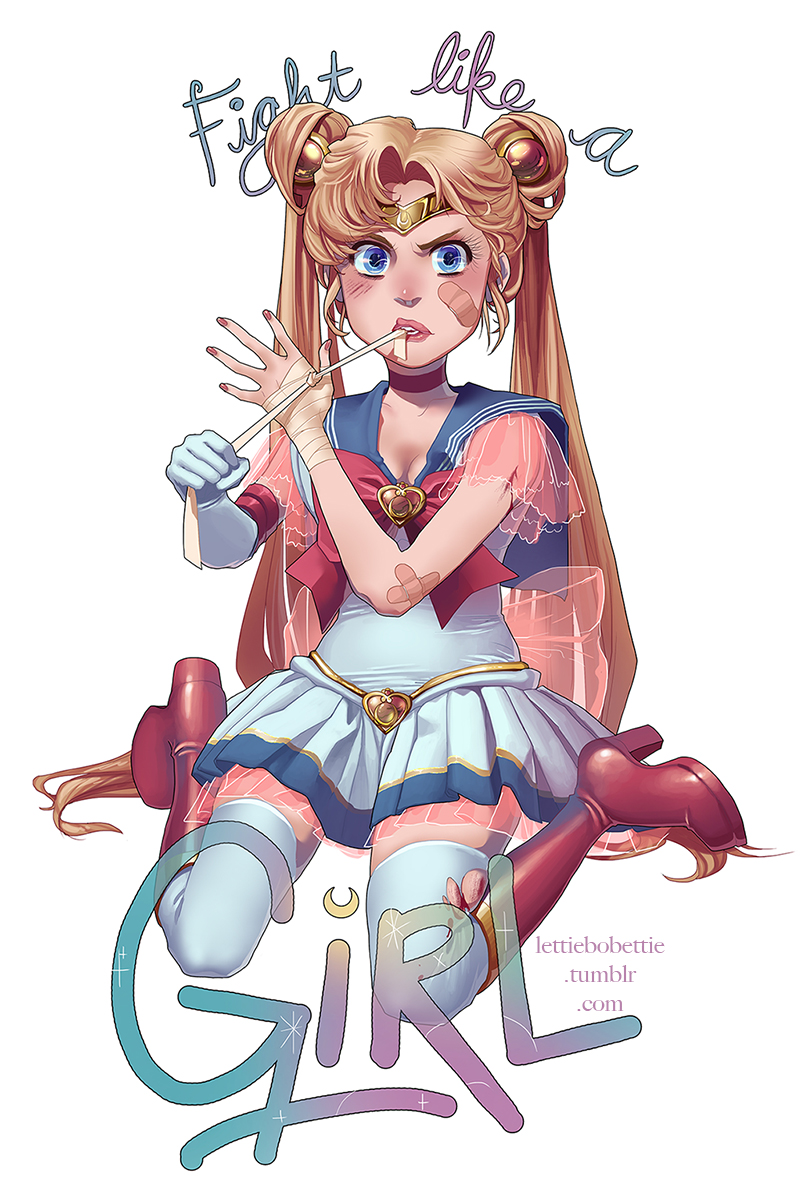
The phrase 'fight like a girl' is trademarked.

Yep - the phrase used as a title in this comic, this movie, this comedy sketch, this self-defense program, and the song below is trademarked, and not to any of these people.
So who owns it? Well it's one company - they're not hard to find, but I'm not linking them, because they try to support a particular thing that I am generally in favor of, but either their lawyer needs to be put back on a leash or they are, corporately speaking, massive dicks.

They're dicks because they have been suing independent artists using the phrase in their art. By specifically targeting independent artists trying to make a living, they can try to control the proliferation of the phrase while not ending up embroiled in court with people who can actually fight back. Because, realistically, the company in question doesn't have a leg to stand on. It's a common phrase. It's a phrase that empowers a lot of women! Except, y'know, when a business that purports to support women uses that phrase to attack their ability to sell their art.

It's an ultimately doomed effort - even Band-Aid ended up changing their jingle to 'stuck on Band-Aid brand' because their brand name had become the common name, and Band-Aids aren't as tied up with feminism and the policing of art as Fight Like A Girl is. So the company is currently trolling, getting themselves more press, and being dicks.

Intellectual property is more complicated than declaring that one owns a segment of language forever, but it's really difficult for independent artists to get legal fees. As an independent author or artist, you're a lot more vulnerable. So while legally when nuisance cases like this come up you could fight back, you might not have the resources. It's deeply frustrating, partly because even if one can dispute a DMCA claim on solid grounds one's distributors might not want the hassle. I don't have any kind of easy solution, just a lot of frustration on behalf of my artist friends. Fair Use doesn't even come into this, as far as I'm aware, because these works have nothing to do with the company that owns the trademark. No one cared about them until they started suing.

So hopefully it'll die down soon, or there'll be something class action on behalf of the artists. In the meantime, it's worth it to know your rights, even if you won't always be in a position to exercise them.
Fight Like A Girl by LettieBoBettie, from DeviantArt

Tuesday, May 19, 2015

Genre Fiction and Sexual Violence

One of the interesting contrasts between literary and genre fiction is what we expect from them: literary fiction we expect to give us good writing and interesting narrative devices, genre fiction we expect to give us a particular emotional experience.

With the recent kerfuffle about Game of Thrones and having gone to see Mad Max yesterday, I was thinking more today about the things I want from an experience.

This tweet summarizes a lot of it. I mean, at this point, we all kind of expect a pervasive threat of sexual violence from every shadow in Westeros. And, because I've seen other action movies, I was kind of expecting some threat of sexual violence in Mad Max. I was braced for the hit. And then it never came, and it was a gift, and I really love that fucking movie.

I read non-fiction and literary fiction both for school and for my own edification, and I brace in the same way when reading a lot of those. Sexual violence is pervasive in the real world, and so it pervades fiction set in the real world.

Which takes me to the genre fiction I read. I have a friend who, because she's perfect, heads an email filled with book recommendations as 'Trash Books!'

They are supernatural romance novels. They're amazing. It's great. In every single one, people fall in love in a long-term-monogamy sort of way, kick butt, have magic powers, and maintain healthy friendships. It is the best kind of wish fulfillment.

Also of note is the way it treats sexual violence. Rape still exists, in these worlds, because I tend to read the kind of paranormal romance with high body counts and so other kinds of violence come with that. Of note, though, is that rape attempts are far less frequent than in the real world. In the series I'm reading now, I'm on book 19 and there have been two characters who were raped, of which only one was a perspective character (the other character started a centuries-long war and she was considered justified except when she nearly murdered her kids). There were also three threats that ended in violence. This is significantly lower than anywhere in the real world. Also, anyone who tries to rape a woman ends up dead or severely beaten. It's very emotionally satisfying.

And it also makes these books kind of reassuring to read: one doesn't have to be quite so braced against the possibility of an onslaught.

That's what genre fiction offers. There are other genres, like cozies, where the only thing one has to be braced against are dessert cravings, but these tight genres offer a kind of consistent experience that's as relaxing as a glass of wine.

Wednesday, May 13, 2015

Body horror and blenders


Becoming a monster plays into an aspect of horror that I'm very fond of: body horror. Becoming a monster sometimes involves physical changes - shifting, or things under the skin. One of my favorite incarnations is in Homestuck and Homestuck fandom, where there exist Helmsmen: high-powered psychics capable of directing a spaceship with their minds. Mostly they are chained to the ships, stripped of free will, and wired directly into biotechnological interfaces. Fanworks are frequently somewhat horrifying.

Body horror taken to this kind of extreme is its own kind of externalization - of different things for different people. Puberty is generally horrifying, with all of the growing and hormones. For trans* people, who sometimes experience their changing bodies as deeply and irreconcilably wrong, it can be deeply horrifying and an utmost betrayal. Disability, severe injury, and assault can all be traumatic. They can all be body horror, and expressing body horror as a plot device, as a way a character becomes stronger can be ways to explore the more mundane sort of body horror at enough remove that it's just fascinating. Body horror can also be a way to explore the ways we take - and deal with - damage.

I haven't generally been fond of the product of writing as therapy, but that has somewhat changed - body horror in particular has let me read stuff that I can relate to - and I've also come to a slightly different appreciation of the ways we use our experiences to create art, which is well-articulated in Amanda Palmer's review of The Ocean At The End Of The Lane. I've found that I really like when things are fine-ground and spit out as art that's appreciable in its own right and not just as a reflection of the creator.

Saturday, November 29, 2014

Schools of thought

I see two major schools of thought about writing when not on deadline, and I mostly see them dichotomized.

The first is that one must write every day, just plant butt in chair and get words done, get them out. Polish later, but write every day, no matter what. The discipline will mean you produce more and more easily and improve.

The second is to write when you feel like it, and to forgive yourself when you're not up for it for months on end. I've seen it mostly as a reaction to the first one, particularly from the chronically ill. A friend with arthritis goes through periods when writing is physically horribly painful; a friend with depression feels blank and flat and hates everything they force themselves to produce.

And the first is more popular generally, but the existence of the second is incredibly important: especially with mental illness, it's imperative to acknowledge that sometimes one's ability will not be the same as a well person, and to not beat oneself up about it.

The dichotomy of the two schools of thought kind of bothers me, in large part because the idea of not writing for months on end makes me feel kind of panicky. I write almost every day, even if it's just a little, and I write for work, and I write for school. I don't have a set word count or time. I just leave a story or two that I'm working on open in tabs (I usually only have five or six tabs open). If I have a thought, I'll go noodle in the document. Progress gets made eventually.

So writing daily - or at least having a constant reminder that I could be writing - is important to me. But not putting a minimum requirement on it is also important. I'm a full time student and paying my own living expenses. During midterms I had an hour-long breakdown over soup one day. I don't need the stress of a self-imposed writing requirement on top of that.

For me the starting point had to be that it's okay to try and fail. I can try to write every day, or try to write five thousand words a week: I can set any goal I want, but if I don't make it, it's okay. I haven't failed as a person, I'm not doomed as a writer for my lack of discipline. It's okay.

I think we have too few messages that it's okay to fail. So the second school of thought, the idea of forgiving yourself and taking care of your needs first, is desperately important. But it's not a terrible thing to also go to the first school, and set goals. We just need to be able to get off each other's - and our own - cases when we don't meet those goals. Because it's okay.

Thursday, August 28, 2014

Character Creation: Cheesy Broccoli Casserole

A story is food for the mind. A drabble is an amuse-bouche, satisfying to the palate but not the stomach. A novel is a multi-course meal, with tastes that complement each other and segue into the next part.

Characters are the ingredients. You combine a little salty, a little sweet, a little bitter, a little sour, a little umami. Umami is a Japanese loanword, for pleasant savory tastes, like meat or onion sauteed in water with a little salt. It’s what makes a meal satisfying, and what makes a character feel real and stick with you.

So a novella can be taken as cheesy broccoli casserole. One dish, consumed in a single sitting. Not as many complexities as a novel, not as many twists and turns and things to synchronize. Importantly to all of this, I need to know what I’m making before I start: ingredients aren’t important until they’re used.

I start with the pasta and the chicken. The pasta is a fairly straightforward character, who’s gone through some hard times and lost some stuff. The pasta’s tragic, boiled backstory has to stop before they’ve gone completely limp. They still need to have some body in order to support the other characters and work well as a group. It’s also important that the pasta be properly drained: having pasta water floating around makes everything lose coherence and draws too much attention to a single character. Their backstory contributed to who they are, but it isn’t the totality of their character.

The chicken has a different sort of backstory, one of murder and personal tragedy and exposure to medium-high heat until thoroughly cooked. Even though the chicken and the pasta both have horrible backstories, they aren’t the [i]same[/i] horrible backstory. Identical characters unbalance the whole dish, no matter how exciting the shared story is. The chicken then gets sliced into smaller chunks. The size of the chunks depends how much I want the dish to be about identity politics, how much I’m okay with having big chunks of narrative devoted entirely to this one character.

The broccoli is a big part of the story, and is usually the main character. It knows the pasta, usually, has a bit of a shared history in that it, too, went in the boiling water. But the broccoli was only in there for a little while, and it only made the broccoli more vibrantly green. Some of the brittle rawness of the broccoli is gone, but it’s still crunchy with vigor and determination. The freshness makes for a good YA protagonist, a fighter that everyone can root for.

The shredded cheddar is not a tragic character, and is part of the glue that holds the group together. Even a glue character, though, one that facilitates group cohesion and keeps our ingredients together when they want to fall apart, can’t have that as their only identity: they need their own sharpness, and enough of them needs to show up in the story that their personality is on display.

Campbell’s 98% Fat Free Broccoli Cheese Soup is our supporting cast, our environment. The minor, supporting characters should at least imply that they can and do exist separate from the story, that they don’t stop existing when the main characters stop needing them. The soup is much improved by using it as a casserole ingredient, but that doesn’t mean it doesn’t exist on its own. The helpful innkeeper might be married to the surly coachman, or cousin to the secret informant with the critical information. It doesn’t need to be on display - we don’t need to make broccoli cheese soup from scratch just to throw it in the casserole - but it should at least be implied. The supporting cast should be dumped all over the other ingredients and mixed well, because our main cast doesn’t exist in a vacuum.

Seasonings are part of atmosphere and setting, but they’re also important to character: salt is something some people avoid out of health concern or prudishness, but it highlights different aspects of character. Sexual content isn’t a bad thing on its own, and can show up different sides of an ingredient, but it’s at the discretion and to the personal taste of the cook. How much salt I use varies - by mood, by how fresh the broccoli is, by whether I want to feel like I’m eating something with pretensions at health or want intensely comforting food. Audience matters, and influences character and cookery in various ways.

Garlic is part of worldbuilding, too: it adds umami and brings the whole together, but overdoing it and giving it too much space in the casserole means that only very particular palates will like it. Foul language can also be peppered in at the discretion of the author, with the knowledge that it pairs differently with each individual ingredient.

After cooking in the story for 45 minutes at 375, the ingredients are still recognizable, can still be pinpointed, can even be enjoyed on their individual merits. But it’s the whole that’s important, and they only serve the whole. The characters can no longer be extricated from the story. Even if I were starting with the same building blocks, the same basics of tragic-but-strong or my-whole-family-is-dead, the details would change with the dish, because the story as a whole comes first, and the characters are only there to further it, and there can frequently be substitutions.

Saturday, August 2, 2014

Monsters

I didn’t watch horror growing up, and thought the genre was mostly faceless killers and shock stuff - cheesy gushing blood and dead cheerleaders. I was turned off by the whole concept, even aside from the lure it should have had as something that was forbidden in our house.

My first horror movie was Ghost Ship, which made me jump but didn't have any lasting emotional impact. A couple years later, I watched The Haunting. The Haunting made an impact - I wasn’t all that horrified, but I was amazed that it wasn’t a ‘proper’ happy ending, and I loved that death and transmutation were Eleanor's happy endings.

I didn’t really get into horror in any kind of meaningful way for about a decade after that, but now, years later, I watch Hannibal and Teen Wolf (the MTV show; yes, it’s horror), and love stories where the monster isn’t an external threat.

A large part of it is that I like the idea that we can all be monsters, given the right circumstances and motivations. That idea is intrinsic to both shows, like the second season of Hannibal where most of the FBI characters are drawn into Hannibal's web, and almost the entirety of Teen Wolf, where our beloved hero has attempted to kill his best friend on more than one occasion. Teen Wolf makes for an easier metaphor, here, because the metaphors at work are utterly transparent: the main character is bitten and turned into a werewolf. A lot of his internal struggle - and the struggle of other characters - is to not let that define him, to not let his monstrous nature make him do monstrous things.

There are external threats, of course, because that's what makes them lose their shirts and get extra powers, but it's a recurring theme that they struggle against themselves, that all of the characters try to remain themselves, try to work towards being better versions of themselves, despite the parts of them that say rending and killing and dumping the bodies in the woods is a really excellent solution to every problem.

Just as important, though, are the times they give in to the monster inside, and do terrible and horrifying things, and have to live with the aftermath. The thing I love about Teen Wolf in particular is that monstrous and terrible things are not the domain of men alone: one young woman gives in to grief and tries to kill a bunch of people, and another takes several years to even re-accept humanity at all, and another comes into knowledge of her own powers and acceptance that she might have to kill someone almost simultaneously. And young women becoming monsters and then grappling with that is a narrative I want to see more and more of, everywhere, because it's amazing. Meghan McCarron did a really fantastic interview with Kelly Link here about young women and monsters and The Vampire Diaries.

When young women are monsters, they become compelling, in part because literal monstrousness is a perfect externalization of the internal growth we grapple with as part of coming of age, and too much about femininity is still considered internal, private, something to be hidden. Black Swan embodies a lot of conventional femininity, at the same time dramatizing and externalizing it in ways that make it utterly compelling: ballet is considered intensely female, and it's a female-dominated movie, and most of the ballet company are women, and almost all the important interactions are between women. But, on the other hand, a lot of the major conflict occurs primarily internally to the main character. The physical changes she perceived were manifestations of psychological pressure.

More literal monstrousness brings femininity more into the open, erases some of the still-persistent separate-sphere ideology, and makes the problems of the young woman characters everyone's problem rather than something she has to struggle with on her own.

Becoming a monster means more and better and harder choices, and more freedoms, and I think that's beautiful, especially as an option for more and more women.

Tuesday, July 8, 2014

Fanfiction as a social force

I did a guest post today on my mom's blog about fanfiction as a social force and reclamatory action by young women. Read it here.

Tuesday, May 13, 2014

Let's (not) Play

My friend MahoganyPoet has been doing Let's Play videos on Youtube. Let's Play videos are a whole booming genre where you can watch someone else play video games. Which - okay. So video games are basically the only form of storytelling that one can actually be bad at: a Let's Play lets you take a passive role. That's why I like them! I didn't grow up with a video game console, and skills such that I don't die horribly and/or kill all my teammates aren't ones I've developed (or, really, tried to develop) as an adult. Let's Play videos can also let other players see how to get past tricky bits or see alternate endings to the one they got, and they let you listen to or watch entertaining people. MP's official job title is 'youtube personality.'*

Her first move is to close Skype to minimize noisy interruptions and to make sure the computer's running cool: the games + Avus4U recording software take a lot of RAM and if the computer heats up too much the game might freeze and crash, losing her place in the game.

Conveniently, this also lets her feed me cheese and fancy crackers.

MP has what she jokingly refers to as the most professional studio setup in the world - a couple monitors, a game controller hooked up to the computer, a freestanding microphone with directional settings and one of those spitguard screen things, and headphones so the game music doesn't get caught on mic. Her recording software already catches the noise from the game, so a microphone pickup would be out of sync, and probably not as clear.

She plays the game, Child of Light, fullscreen on one of her monitors, while the other one shows what's being picked up by the recording software.

I'm only able to see about a quarter of the screen from behind her, and moving might get picked up by the mic and would also take me away from the crackers and cheese, so I mostly know what's going on by what she says, and will pick up the action when I'm watching the video later. She accidentally summoned an ogre, which she hadn't intended to during this episode, which prompted her to pause, sign off on the video, and then start a new video so she could finish with the ogre and save the fish people.

It's not quite the same as watching someone play video games directly and snarking at them, which made it difficult to refrain from snarking when sitting directly behind MP and listening to her commentary, but the videos are cool and progress pretty linearly through the story.

Mahogany Poet can be found on Twitter and, of course, on Youtube.

*Seriously, it's her job: turn off Adblock for Youtube.

Saturday, May 3, 2014

Piracy and books

I spend a lot of time talking to writers.

I spend a lot of time specifically talking to indie writers who make all their own publishing decisions.

It's pretty great!

But one frustrating part of it are some of the myths that get perpetuated, like that free stuff hurts sales. This can take the form of distrust of and unhappiness with Creative Commons licensing, but on the whole tends to take the form of aggressive anti-piracy stances.

And, hey, I'm not super enthusiastic about piracy, because intellectual property is important and it's important to respect it and the people who create the things one likes. But the thing about piracy is that it's not actually lost sales.

You heard me right.

The people who are pirating your books either never would have bought them or are going to like it and either buy a copy or consider buying future works of yours.

Okay, let me talk about examples from my own life. Four books I have pirated are the 50 Shades trilogy by E L James and Sunshine by Robin McKinley.

50 Shades I wrote about here: to say I was unimpressed is a dramatic understatement. I also knew, going in, that it was going to be probably-enraging Twilight fanfiction, and made a deliberate decision to not support the author. That was never going to be a sale. I was never going to purchase anything written by her. It does not affect her sales numbers in the least.

Sunshine* was the opposite story: I love it, and have purchased two paperback copies of the novel, both of which have gone missing. It's also not available as an ebook through legitimate channels. So nor was that a lost sale: I'd already purchased it, and was unlikely to purchase it a third time in the same form.

Piracy can actually increase sales, but hey, if you don't want in on that, the best way to discourage piracy of your particular works is to make legal downloads ubiquitous. Make DRM-free purchase of your works for multiple platforms easy, and I can guarantee at least some people will find hitting the 'buy' button more appealing than piracy.

*Ms. McKinley, if you happen to see this and be unhappy with someone pirating your work, I'd be more than happy to Paypal you your royalties.

Monday, February 10, 2014

Walking Away

Something not a lot of people know about me is that sometimes I get rage-induced nosebleeds. Conditions have to be right: fairly dry weather, and I have to be sitting still so that the spike in my blood pressure is a substantial difference, and I have to be really enraged. But it's happened, a couple of times. I get headaches, too. More frequently, I'll burst into tears when I'm really frustrated.

None of these circumstances are great for making an argument, which goes kind of counter to my burning and vicious desire to get the last word.

One of the things I was told when I was bullied as a kid was to just walk away. This was not helpful advice, as kids are, by and large, sociopathic and predatory, and pounce on weakness. Turning your back and trying to 'be the bigger person' like adults advised was not a functional solution, and sometimes made things worse.

The good news about kids being awful is that they grow up!

As an adult, arguments that degenerate to shrieking that someone else is a poopy-head . . . are not productive, and for me the stakes no longer involve social ostracism. The stakes different, a lot of the structure of disagreement is different, and usually the premise of the disagreement is different (Russia should be sanctioned for human rights violations vs. "you're fat"). This means that a lot of the - really maladaptive! - strategies I developed as a kid are no longer functional.

Which brings us around to walking away. Because it's a more tenable strategy now. I get to consider things like 'will staying engaged in this conversation yield anything productive?' and 'is getting the last word now worth the headache I'll have in an hour?'

And if the answer is no, I can walk away. I can physically remove myself or say 'I'm done talking about this right now,' or  'can we please be done with this,' or block people on social media sites, and I'm not required to engage in things that harm me. Being an adult kicks ass.

Wednesday, February 5, 2014

University

So I referenced the fact that I'm in university again in my last post.

I'm back at UW-Whitewater, this time majoring in Liberal Studies, and this is my second semester, and the second doing courses entirely online. Doing it all online has required a major reshuffling of my time, which has coincidentally enabled me to work more hours. Time management helps, who knew?

It's interesting being back in school, especially as an older student: I'm much more inclined to argue with authority. One of my textbooks this semester said something heinously and easily verifiably wrong in a chapter about research, so I ended up putting together a long and well-cited argument about why it was wrong.

As a condensed version: top-level domains are sometimes shorthand for figuring out credibility of information. Sponsored top-level domains are almost always going to be much more trustworthy than generics, so it's important to know the difference.

Friday, January 31, 2014

Literary Analysis

I've actually been attempting a fair portion of literary analysis in the last few months, and the deconstruction of narratives in general. The only issue, and the reason it's not here, is that it's all fandom-based.

My reluctance isn't a matter of shame (please see links on Words page to erotica I've written), but a matter of context: the discussion occurs primarily on Tumblr, and is tagged such that mostly other fans see it. I don't have to introduce characters or concepts and I don't have to preface arguments with a description of the common perceptions I'm rebutting: I get to rest on the laziness of shared common knowledge.

But this semester I'm taking a required entry-level literature class, and I'm finding exegesis much easier. Surprisingly, arguing about the significance of driving to a relationship or about how someone's mistranslation means they're evil (it was true) has prepared me very well for expositing at length about women as portrayed in 1946 movies about veterans. Of course, it's also prepared me for injecting comparisons to Jane Austen and the Vietnam War into the same essay, but that's what second drafts are for.

Wednesday, October 16, 2013

Meta: Falling Star

This was my first serious foray back into original fiction after months and months of fan fiction. It's a very different process, because characterization and worldbuilding are about creation as opposed to adherence or clear alteration. In writing fanfiction (at least the way I do), the focus is more on building emotional connections between characters and having a well-paced adventure, so that's what I got to focus on.

Falling Star involved a lot of research on the late fourteenth century in Europe, and then throwing out or altering parts of it because magic. I wallow in description a lot: probably too much, for people who don't like historical detail, but it was a lot of fun to take the time to show that I had done the research. Lord of the Isles as a title is a bit of an exception, since in the real world, it's a Scottish title.

Titles for stories are usually a challenge for me, and I generally hate them after the fact, but I like this one, because it works on a couple levels. The body of the action takes place during a meteor shower, so under cover of what are often misnamed falling or shooting stars, with a lot of important bits deliberately staged at night (the introduction, the first real conversation with Arthur, finding out what Rigel had done). All of the characters except Eadweard are also named after stars: Vega for the brightest star in the constellation Lyra, Arthur as an Anglicization of Arcturus,  the brightest star in Bootes (and also to suggest that he's a good King by way of association with King Arthur), Rigel as the brightest star in Orion. I get a lot of mileage out of that one astronomy class I took in university. In hindsight, I'd have gone for something like Albireo (from the constellation Cygnus) for the King of Alba, because, while it might not suggest a common name for an English King like a modified version of Edward does, it sounds more like Alba and might further suggest that this is Alba rather than England, and things are different here.

Wednesday, October 9, 2013

Blog fiction: Falling Star

“Let me hold you, please.”


“We can’t. I’m promised to another.”


“Just for tonight?”


She kissed him, fierce and sorrowful. “I love you. Now go.”


As Rigel climbed out the window, a star fell in the distance, the first of a week-long meteor
shower.


Lyra leaned out after him. “Don’t pine for me. It has to be this way. I am securing an alliance, and Arthur is not a bad man, so I will be doing my best to be happy.”


Rigel paused on the trellis and met her eyes. The kitchen garden was a long way down. “Does that mean you won’t miss me? That you won’t long for me at all? That you’ll forget?”


She closed her eyes briefly and swallowed. When she opened them again, her eyes glittered with unshed tears. “No.”


Suddenly shame-faced in addition to despairing, Rigel looked away. “I hope he treats you as you deserve.”


Lyra closed the windows reluctantly and watched the moon through the leaded glass. By the time the waning gibbous moon had set, she would be married. She set her forehead on the cool, indifferent glass and prayed for it to stand still.

Tuesday, July 30, 2013

Differences between Wordpress.com and Wordpress.org

Wordpress.com hosts blogs: wordpress.org is where you get the wordpress software to upload onto your own server (or that of a friend, family member, or someone you pay to host your stuff). It's important to differentiate, because they're both fantastic, and they're easily confused, because the interface is similar. They have their own breakdown of differences, but this aims to be more descriptive.

Wordpress.com is nice because you don't have to mess around with a server or, necessarily, with getting your own domain.

Wordpress software is nice because you can do anything you want. Cue maniacal cackling off into the distance.

But more concrete comparisons:

Access:
The first thing you did was take out that little Meta toolbar on the side, right? It looks unprofessional and sloppy, though some people dislike it more than others (I hate it).

.com: go to your site/wp-admin or wordpress.com or someone's site where they left up the Meta toolbar. It doesn't matter which, since you can navigate the whole back end of Wordpress after the one login.
Software: go to your site/wp/wp-admin. That's pretty much the only option.

Appearance:
Themes govern most of how your blog appears. Themes are a collection of Cascading Style Sheets (CSS) that tell things to align left or align right or show up purple.

.com: There are a variety of free themes, and even more paid ones, and you can almost definitely find one you love. Typically from there you can also select background color or image and header image. If you buy an upgrade, you can also edit the CSS. You don't get access to the CSS files themselves, though, so you are overwriting blind. If you are pretty confident, that's fine, whatever. If you are mostly used to editing and not building and have never bothered to look at the source code for various pages, when Wordpress updates and breaks your theme you will spend several hours drinking and frantically trying to correct the website, while text boxes float around seemingly arbitrarily and look completely different on the three screens you eventually end up looking through because you are trying to fix the header and you've changed the alignment and indent and mandatory margin but you don't actually have access to the files and it doesn't occur to you to override the vertical alignment, and you then switch to a different theme that is not actually broken but does truly horrifying things to your submenus. When you eventually wake up, vodka having beaten panic at about three-thirty in the morning, Wordpress will have fixed it and you will spend the rest of the day in nihilistic despair.
Software: There are myriad themes and you can not only customize the background and header but also look at the CSS and pinpoint that this line of code here governs what color links default to and change just that to make everything violently orange. You will accidentally leave an extra space or digit or apostrophe somewhere and crash the server. Things will need to be reinstalled. You can take comfort in your own agency in the failure.

Seriously, though, themes and editing without messing with the CSS can get you a pretty customized website, and Wordpress is great about fixing their mistakes and errors that crash the server can be corrected.

Widgets:
If you're building a Wordpress site, you freaking love widgets. Widgets are awesome. The Text widget (which lets you insert arbitrary text and HTML) is how you get your Twitter feed or follow button up, and your tumblr follow button, and a lot of the other buttons social networking sites let you generate. But widgets let you do a heck of a lot more than that: they're your Facebook like box and your RSS feed and your contact info and your flickr link and your category cloud. Widgets are how you implement neat features without extensive background in coding.

.com: limited number, but they cover a lot, and the text widget with HTML adds additional functionality.
Software: widgets for the software are actually a feature of the plugins you can get. Plugins for the software are great, because you can get ones that tweet automatically every time you get a new post, or generate a new post every time you tweet, or do all manner of strange and unlikely things. The trick is that they are reviewed but not actively policed, so you need to make sure it actually does what it says it does, and isn't broken.

Akismet:
Akismet is a spam filter, and is how you filter all the comments that are lists of links to scams or are soliciting people to buy knock-off Gucci handbags on your bike site. You want a spam filter. Akismet's pretty good.
.com: it's already there.
Software: you need to install the plugin. It is a terrible amount of work. You have to click, like, three things.

Scalability:
What do you do when you suddenly get lots of traffic on your website?
.com: It absorbs the traffic, and doesn't cost you extra money.
Software: Your server might crash, or you might need more servers. This can cost more, and may or may not be able to respond quickly to a sudden surge.

Which you choose will depend on your comfort with code, your ability to acquire and comfort with self-hosting, and how much you like customizability. They're both excellent platforms, versatile enough for almost everyone.

Friday, July 19, 2013

Surveillance

Everyone's heard about the NSA tapping phones, right? That's not news.

Basically, they're following up on permissions they got in the Patriot Act, when we were all still going 'please take my liberty and give me security and screw Ben Franklin.'

This is a great post that talks about what such measures can lead to.

Which leads to my perennial post about anonymity. I have not posted about it nearly as much as I thought I had, given that I am persistently cranky about it. Anonymity is very hard to do, and true anonymity is something that has to be worked on persistently and in the face of people who would really prefer that you didn't. Things like The Onion Router and other things discussed in Cory Doctorow's Little Brother are good starts, and Cryptocat is a valuable tool, and encryption keys are completely fantastic.

But all of these things take effort, and are very different from posting 'down with the government' or whatever on your Facebook page. If you're going to go through the effort of anonymity, if you care about a cause enough to get active in protesting, posting on your Facebook or whatever about it is actually potentially dangerous to you and everyone who liked it out of abiding bitterness over parking tickets.

So if you care about something deeply? Talking casually about it on the internet is probably one of the last things you want to do. In light of the surveillance abilities of even reasonably democratic governments, making sure everything you say online would meet with the approval of a hyper-judemental theoretical grandmother is a safe bet.

Also, for writers, anonymity is almost always the enemy of publicity.